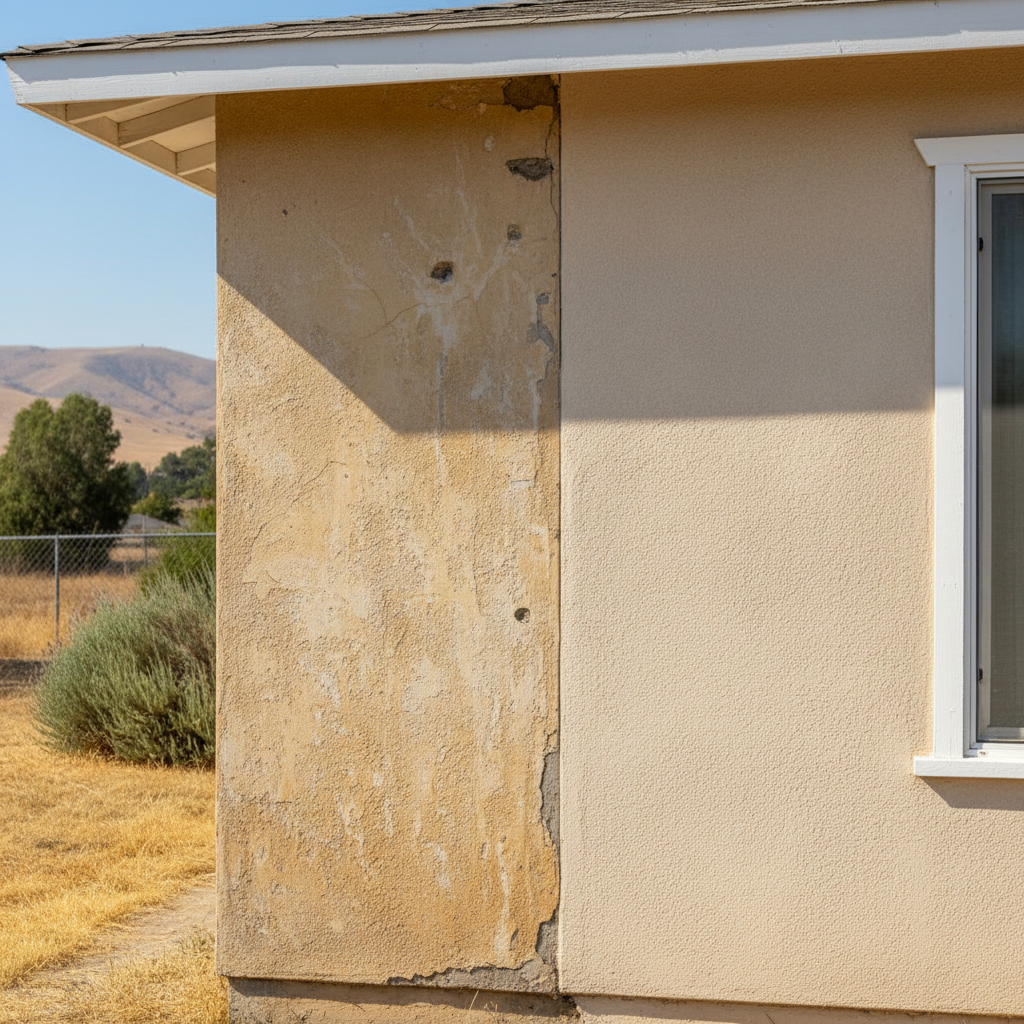
Alright, let's talk stucco. If you're thinking about putting new stucco on your house, or maybe repairing what's already there, you've probably heard terms like 'traditional stucco' and 'synthetic stucco.' It can get confusing fast, and honestly, some folks out there will try to push whatever makes them the most money. My job is to give it to you straight, so you can make the best decision for your Fairfield home.
What's Traditional Stucco?
When I say 'traditional stucco,' I'm talking about what's also called 'hard-coat stucco' or 'cement stucco.' This is the stuff that's been around for centuries. It's a mix of cement, sand, lime, and water. We apply it in multiple layers over a lath (usually wire mesh) and a moisture barrier. You'll typically see three coats: a scratch coat, a brown coat, and then a finish coat. Each layer cures, making for a very hard, durable surface.
And Synthetic Stucco (EIFS)?
Synthetic stucco is actually a type of Exterior Insulation and Finish System, or EIFS. It's a bit newer to the scene, you know? Instead of cement, it starts with an insulation board (like foam) that attaches to your wall. Then, we apply a base coat with a fiberglass mesh over that, followed by a textured finish coat. The finish coat is usually an acrylic polymer, which is flexible and can come in a huge range of colors and textures.
Cost: Upfront vs. Long-Term
Generally, traditional stucco tends to be a bit less expensive to install initially. It's a simpler material, and the labor, while skilled, doesn't always require the same specialized techniques as EIFS. However, if you're looking at energy efficiency, EIFS can save you money in the long run. That insulation board makes a big difference in keeping your home cooler in those hot Fairfield summers and warmer in the winter, which means lower utility bills. So, it's a trade-off: lower upfront cost for traditional, or higher upfront but potential savings with EIFS.
Durability and Maintenance
This is where things get interesting, especially around here. Traditional stucco is incredibly hard. It's impact-resistant and can really take a beating from hail or stray baseballs. It's also breathable, meaning it can handle some moisture vapor movement, which is good. The downside? It can crack. Small hairline cracks are pretty common as the house settles or with temperature fluctuations. These usually aren't structural, but they do need to be monitored and sealed to prevent water intrusion.
EIFS, on the other hand, is more flexible because of its acrylic finish. This means it's less prone to cracking from minor shifts or temperature changes. It also resists fading very well. But EIFS isn't as impact-resistant as traditional stucco. A sharp blow can dent or puncture the foam insulation underneath, which then needs professional repair. The biggest concern with early EIFS applications, especially from back in the 80s and 90s, was water intrusion if it wasn't installed perfectly. Modern EIFS systems have improved drainage, but proper installation is absolutely critical to avoid moisture problems.
Appearance and Versatility
Both types of stucco offer a wide range of finishes and colors. Traditional stucco gives you that classic, solid, earthy look. You can get smooth finishes, sand finishes, or even a rougher dash finish. EIFS offers even more design flexibility. Because of the foam base, we can create intricate architectural details like cornices, bands, and arches that would be much harder or more expensive with traditional stucco. The acrylic finish also allows for a broader spectrum of vibrant, long-lasting colors.
My Recommendation for Fairfield Homes
Given our climate here in Fairfield – those hot, dry summers and occasional wet winters – and considering the typical soil conditions we have, which can lead to some minor foundation settling over time, I generally lean towards traditional hard-coat stucco for most residential applications. Why?
- Its inherent breathability is a big plus in a climate that can see significant temperature swings.
- The impact resistance is great for everyday life.
- While it can crack, these cracks are usually visible and easier to spot and repair before they become major issues, especially if you're doing regular maintenance.
- It's a proven system that's been used successfully in this area for decades, from the older homes in the Dover neighborhood to newer builds.
That said, if you're really prioritizing energy efficiency and want a very specific, intricate architectural look, modern EIFS is a good option. But you absolutely, positively need to ensure it's installed by a highly experienced contractor who understands the importance of proper flashing and drainage. Don't skimp on that. At Apex Stucco Solutions, we've seen the good and the bad of both, and we always make sure the job's done right, no matter which you choose.
Ultimately, the best choice depends on your budget, your aesthetic preferences, and your priorities for durability and maintenance. But for a solid, reliable, long-lasting exterior that stands up well to our local conditions, traditional stucco is often the way to go.