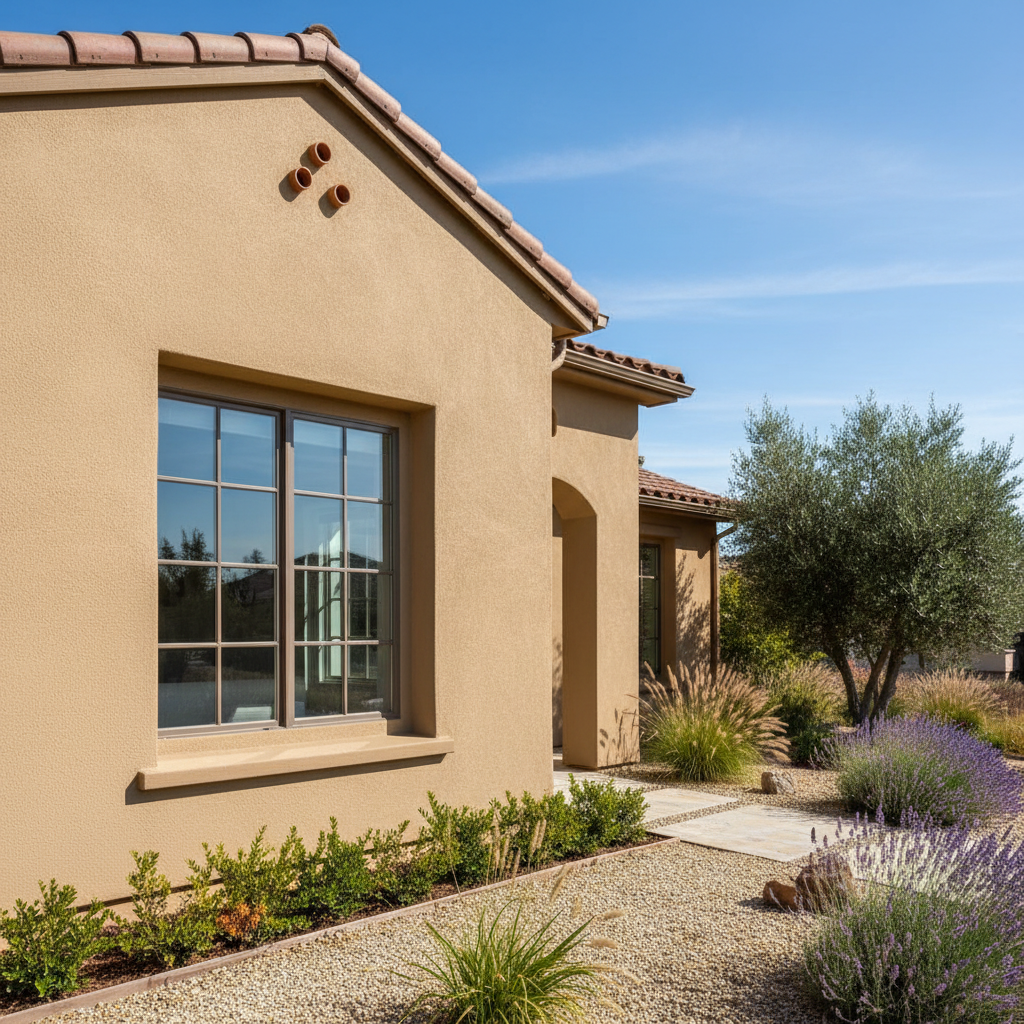
Alright, let's talk stucco. You've got it on your Fairfield home, and you want it to look good and protect your investment for years to come. That's smart thinking. Stucco is a durable material, sure, but it's not a 'set it and forget it' kind of deal, especially with our unique Fairfield weather. We've got those hot, dry summers that can bake everything, followed by cooler, wet winters. That constant expansion and contraction, plus the occasional heavy rain, means your stucco needs a little love to stay strong.
Extending Your Stucco's Life: Smart Moves
The best defense is a good offense, right? That holds true for your stucco. Here's what I've seen makes a real difference in keeping it in top shape:
- Watch Your Drainage: This is huge. Water is stucco's biggest enemy if it gets trapped. Make sure your gutters are clean and directing water away from the foundation. And check those downspouts — if they're just dumping water right next to your house, that's a problem.
- Mind Your Landscaping: You need at least a 4-inch gap between the soil or mulch and the bottom of your stucco, right where the weep screed is. If you've got concrete paving, keep it at least 2 inches below that weep screed. Blocking the weep screed means moisture gets trapped inside your walls, and that's a recipe for dry rot and other headaches.
- Check Your Flashing: This includes kick-out flashing where your roof meets a wall. This L-shaped piece is critical for diverting rainwater into your gutters and away from your walls. Without it, water can sneak behind your stucco, leading to rot and mold. It's a small detail that makes a massive difference, especially with our winter rains, wouldn't you agree?
- Sealants and Caulking: Around windows, doors, and other spots where things poke through the wall, make sure your sealants are in good condition. These are your first line of defense against water getting in. If you see any cracking or deterioration, it's time to re-caulk.
Regular Upkeep: What You Should Be Doing
You don't need to be out there every weekend, but a little regular attention goes a long way.
- Seasonal Inspections: Walk around your house twice a year, maybe in spring and fall. Look closely at your stucco. You're looking for anything out of the ordinary.
- Cleaning: Stucco is porous, so it can collect dirt, grime, and even some mold or algae. For general cleaning, a garden hose and a mild detergent usually do the trick. Mix a mild detergent with water and apply it with a soft-bristled brush. Then rinse thoroughly. If you're using a pressure washer, keep it on a low setting (under 1500 PSI) and hold the nozzle at least 24 inches away, angled at 45 degrees. Too much pressure can damage the stucco, you know. For mold or mildew, a solution of equal parts bleach and water can work, or a specialized stucco cleaner.
- Minor Crack Repair: Hairline cracks are pretty common and often just cosmetic. You can usually fix these yourself with a stucco patching compound. Clean out any loose debris, apply the patch with a putty knife, and smooth it to match. Make sure it dries completely.
Warning Signs of Bigger Problems
Sometimes, what looks like a small issue is actually a symptom of something more serious. Don't ignore these:
- Cracks Larger than 1/8 Inch: While hairline cracks might be cosmetic, anything wider than an eighth of an inch needs a closer look. These can be signs of foundation movement or other structural issues. Cracks can also allow moisture to get in, leading to bigger problems.
- Discoloration or Staining: Brown or rust-colored streaks, especially around windows or doors, often point to water damage. White, chalky residue (called efflorescence) also means moisture is moving through the wall.
- Bulging, Soft Spots, or Crumbling Stucco: If your stucco feels soft, looks like it's bulging outwards, or is crumbling, that's a red flag. This usually means moisture is trapped behind it, causing the stucco to delaminate or the underlying materials to rot.
- Rusty Weep Screed: If you see rust on the metal weep screed at the bottom of your wall, especially if it's flaking or causing the stucco to crack around it, that's a problem. Rust expands, and this